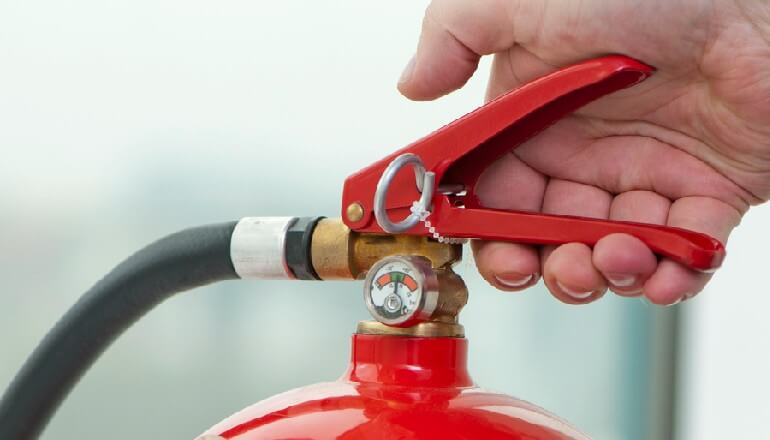
Bradford Commercial Fire Extinguishers –
Fire extinguishers remain one of the most important first-response tools available in commercial fire safety. In Bradford’s diverse commercial landscape — which includes offices, manufacturing sites, warehouses, retail units and public buildings — correctly specified extinguishers can play a vital role in controlling small fires before they escalate into major incidents. However, the effectiveness of extinguishers depends entirely on correct selection, positioning and ongoing maintenance.
Many businesses assume installing a few extinguishers around a building automatically ensures compliance. In reality, commercial fire extinguisher provision should always follow a structured fire risk assessment. Bradford businesses operate in a wide range of environments, each presenting different fire risks. Electrical equipment, combustible materials, cooking oils or flammable liquids all require different extinguisher types.
The most commonly installed extinguisher in commercial premises is the water extinguisher, designed for Class A fires involving materials such as paper, wood and textiles. Offices, schools and retail premises frequently rely on these units for general fire coverage. However, water extinguishers are unsuitable for electrical fires or flammable liquids, meaning additional protection is often required.
Carbon dioxide (CO₂) extinguishers are widely used in Bradford commercial environments because of their suitability for electrical fires. These units are typically positioned near electrical distribution boards, server rooms, office equipment and machinery control panels. Because CO₂ leaves no residue, it allows electrical equipment to be protected without causing additional damage.
Foam extinguishers offer another versatile option for many commercial buildings. They are suitable for Class A fires as well as certain flammable liquid fires, making them particularly useful in mixed-risk environments such as workshops or garages. Businesses storing small amounts of fuel or chemicals often rely on foam extinguishers as part of their fire safety strategy.
Correct placement of extinguishers is just as important as selecting the right type. In Bradford commercial premises, extinguishers should be positioned so that they are clearly visible, easily accessible and located along escape routes. The goal is to ensure staff can reach fire-fighting equipment quickly without moving further into danger.
Travel distance also plays a role in extinguisher placement. Fire safety guidance generally recommends that occupants should not need to travel excessive distances to reach appropriate equipment. In larger premises such as warehouses or industrial buildings, this may require multiple extinguishers distributed throughout the site to ensure adequate coverage.
Signage is another important factor often overlooked in commercial settings. Even if extinguishers are installed correctly, staff must be able to identify them quickly in an emergency. Clear signage above the extinguisher ensures visibility even if the unit itself is temporarily obscured by equipment or furniture.
Maintenance is essential to ensure extinguishers remain reliable. Commercial extinguishers should be serviced annually by a competent engineer who checks pressure levels, seals, hoses and overall condition. In addition to annual servicing, responsible persons within the business should carry out periodic visual inspections to confirm extinguishers remain in place and undamaged.
Staff training also plays a critical role in effective extinguisher use. Employees should understand the different types of extinguishers available and when it is appropriate to use them. In many situations, evacuation remains the safest option, and extinguishers should only be used when it is safe to do so.
For Bradford businesses, fire extinguishers are far more than a regulatory requirement. When specified correctly and maintained properly, they provide a vital first line of defence that can prevent small fires becoming major incidents. By ensuring the correct equipment is installed and accessible, organisations can protect employees, property and business continuity.