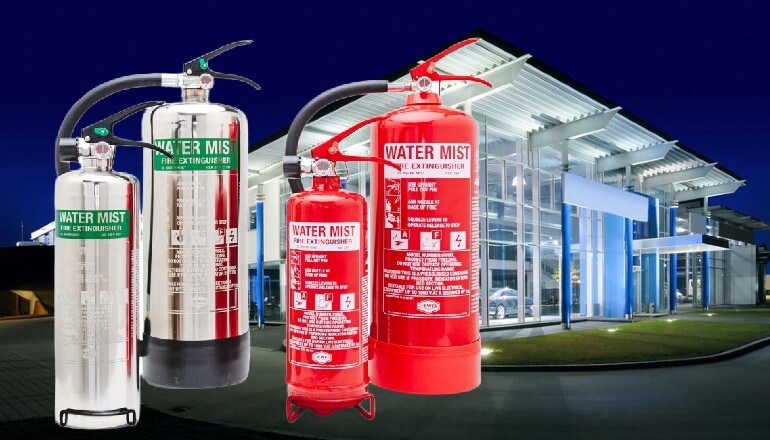
Fire extinguishers in Bradford commercial premises are not just a compliance requirement — they are a critical first line of defence in controlling fire incidents before they escalate. However, one of the most common issues across businesses is not the absence of extinguishers, but the incorrect selection and placement of them. A properly specified extinguisher strategy must align with the specific fire risks present within the building.
Different types of fire require different extinguishing agents. In commercial environments, these risks can vary significantly depending on the nature of the business. Offices, retail spaces, kitchens and industrial units all present different hazards, and using the wrong extinguisher can be ineffective or even dangerous.
Water extinguishers are commonly used in offices and retail environments where the primary risk is Class A fires involving materials such as paper, wood and textiles. These extinguishers are effective, straightforward to use and typically form the backbone of fire protection in lower-risk commercial settings.
Foam extinguishers extend this capability by also covering Class B fires involving flammable liquids. This makes them particularly suitable for environments such as workshops, garages or premises where small quantities of fuel or solvents may be present. In Bradford commercial settings where mixed risks exist, foam extinguishers are often specified to provide broader coverage.
CO2 extinguishers are essential in areas where electrical equipment is present. Offices, server rooms, retail tills and plant areas all contain live electrical components, and using water-based extinguishers in these environments would be unsafe. CO2 extinguishers provide effective fire suppression without leaving residue, making them ideal for protecting sensitive equipment.
In commercial kitchens, fire risk changes significantly. Cooking oils and fats present a Class F fire risk, which requires specialist wet chemical extinguishers. These are designed to suppress high-temperature cooking fires safely and are a critical requirement in any Bradford business operating a commercial kitchen.
Powder extinguishers are sometimes used in industrial environments due to their versatility, covering multiple fire classes. However, they are generally less suitable for enclosed commercial spaces due to the visibility and contamination issues they can cause when discharged.
Correct placement of extinguishers is just as important as selecting the right type. Extinguishers should be located along escape routes, near exits and in areas where fire risks are highest. They must be easily accessible and clearly visible, ensuring they can be used quickly in an emergency. In larger Bradford premises, this often requires a structured layout to ensure full coverage across the building.
Signage also plays an important role. Clear identification of extinguisher types and locations ensures that staff can respond effectively in an emergency. Without proper signage, even well-placed equipment can be overlooked or misused.
Training is another critical factor. Staff must understand which extinguisher to use for different types of fire and how to operate them safely. Even the best equipment is ineffective if it is not used correctly. Basic fire safety training ensures that employees can respond confidently and appropriately.
Maintenance is a legal requirement and essential for reliability. Fire extinguishers must be serviced regularly to ensure they remain in working condition. This includes checking pressure levels, seals and overall condition. In Bradford commercial premises, routine servicing ensures compliance while also reducing the risk of equipment failure.
Risk assessment underpins the entire process. Every business must assess its fire risks and ensure that appropriate extinguishers are in place. This is not a one-time exercise — as businesses evolve, layouts change and equipment is updated, fire risks must be reviewed accordingly.
For businesses in Bradford, fire extinguishers are a key part of a wider fire safety strategy. When correctly specified, positioned and maintained, they provide an effective first response that can prevent minor incidents from becoming major emergencies.