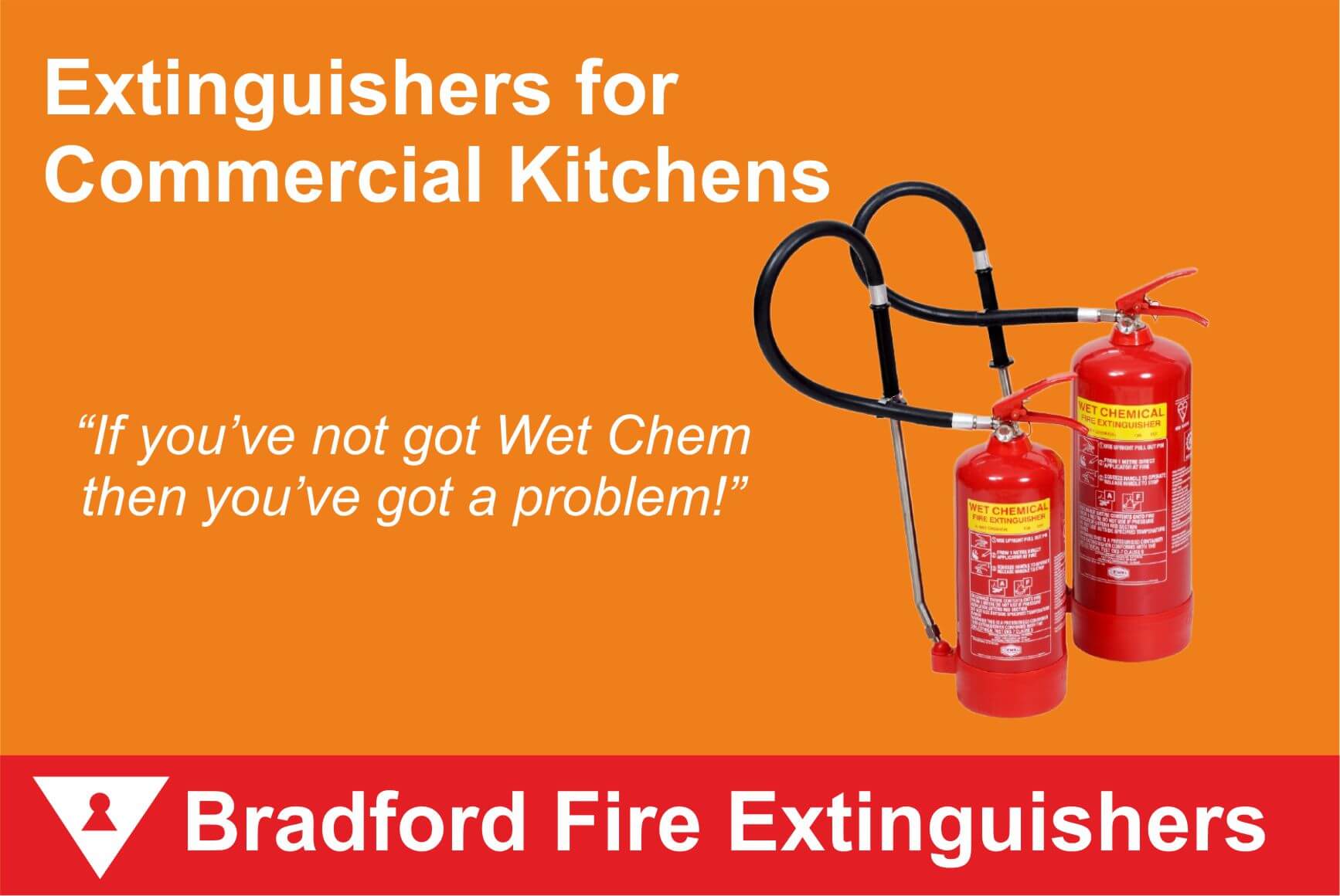
Commercial Kitchens Fire Extinguisher –
Commercial kitchens rarely stay exactly the same for long. New cooking equipment is installed, preparation areas are relocated, serving counters are expanded and extraction systems are upgraded as businesses evolve. Across Bradford, restaurants, cafés, pubs, takeaways, hotels and catering facilities regularly refurbish their kitchens to improve efficiency and increase capacity. However, one important consideration is often overlooked once the building work is complete—the location and suitability of fire extinguishers.
Many businesses assume that because extinguishers were compliant before the refurbishment, they will remain suitable afterwards. In reality, even relatively minor changes to the layout can affect travel distances, accessibility and the types of fire risks present within the kitchen.
For example, installing a larger range cooker or additional deep-fat fryer may increase the cooking oil hazard within the premises. Likewise, relocating electrical appliances or introducing new preparation equipment can alter where electrical fire risks are concentrated. If extinguisher positions are not reviewed at the same time, staff may find that equipment is no longer immediately accessible when it is needed most.
Accessibility is one of the most important considerations. Fire extinguishers should always be easy to locate and retrieve without staff needing to pass through an area already affected by fire. During refurbishments, new partition walls, refrigeration units or storage racks are sometimes installed directly in front of extinguisher positions, making them less visible or more difficult to reach.
Visibility also plays a significant role. Staff working in a busy commercial kitchen need to identify fire equipment instantly, particularly during an emergency. If extinguishers become hidden behind equipment or no longer benefit from clear signage, valuable seconds can be lost during an incident.
Commercial kitchens present several different fire risks simultaneously. Cooking oils require specialist wet chemical extinguishers, while electrical equipment may require carbon dioxide extinguishers in appropriate locations. General combustible materials within adjacent storage areas may require water or foam extinguishers depending on the environment. As kitchen layouts change, the distribution of these risks often changes as well.
Another consideration is staff workflow. Modern commercial kitchens are designed for efficiency, with chefs and kitchen assistants moving rapidly between preparation, cooking and serving areas. Fire extinguishers should never obstruct these routes, but equally they should remain immediately available from the normal working positions within the kitchen.
Businesses carrying out refurbishments frequently invest significant sums in modern extraction systems, ventilation and catering equipment. Reviewing fire extinguisher provision at the same time represents a relatively small additional investment that helps ensure the overall fire protection strategy remains appropriate for the new layout.
Professional fire risk assessments often identify these changes. Assessors consider how people use the building, where fire hazards are located and whether firefighting equipment remains suitable following alterations. This process helps businesses maintain effective protection rather than relying on historic layouts that no longer reflect how the kitchen actually operates.
Training should also be reviewed after refurbishment work. Staff may have become familiar with previous extinguisher locations over many years. Once equipment has been relocated, employees should understand where extinguishers are now positioned and which type is appropriate for different fire risks. Even experienced members of staff benefit from this reminder following significant alterations.
Regular servicing remains equally important. Fire extinguishers should continue to receive routine inspection and maintenance in accordance with recognised standards, ensuring they remain fully operational throughout their service life. Refurbishment work provides an excellent opportunity to confirm that all equipment is correctly identified, accessible and suitable for the revised environment.
Many Bradford catering businesses schedule extinguisher reviews alongside reopening after refurbishment projects. This coordinated approach allows fire safety equipment, signage and staff awareness to be updated before customers return, reducing disruption whilst helping demonstrate a proactive approach to workplace safety.
Ultimately, commercial kitchen refurbishments are about improving the business. Whether creating additional covers, increasing production capacity or modernising facilities, every change should also be reflected in the fire safety strategy. Reviewing extinguisher locations ensures equipment remains exactly where it is needed, helping staff respond quickly and safely should an emergency ever occur.
For businesses throughout Bradford, professionally assessing fire extinguisher provision after refurbishment is a straightforward step that helps protect employees, customers, valuable equipment and the future operation of the business.