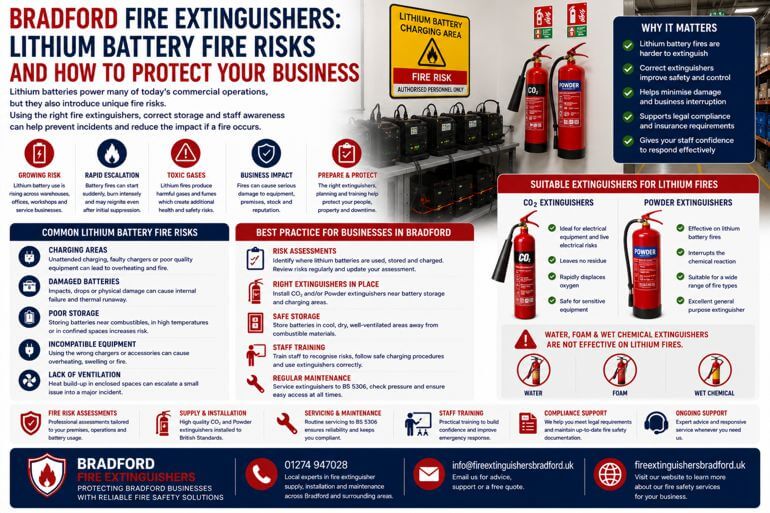
Lithium Battery Fire Risks –
Lithium battery technology is now used across countless commercial environments in Bradford. Businesses increasingly rely on:
- cordless power tools
- electric delivery equipment
- laptops
- warehouse scanners
- cleaning equipment
- e-bikes
- backup power systems
- and battery storage technology
While these systems bring major operational benefits, they are also introducing new fire risks that many businesses are still not fully prepared for.
Lithium battery fires behave very differently from traditional workplace fires, which is why extinguisher planning is becoming increasingly important for businesses operating battery-powered equipment.
Lithium Battery Fires Can Escalate Rapidly
Unlike many conventional fires, lithium battery incidents can:
- develop extremely quickly
- generate intense heat
- reignite unexpectedly
- and produce hazardous gases
This creates challenges for:
- staff response
- evacuation
- and fire containment
particularly in enclosed commercial environments.
More Businesses Are Storing Batteries Indoors
Many commercial premises now store:
- charging equipment
- spare batteries
- battery-powered tools
- and portable electrical equipment
inside:
- workshops
- offices
- warehouses
- and service areas
Improper storage or charging conditions may increase fire risk significantly.
Charging Areas Require Careful Fire Safety Planning
Battery charging locations can become higher-risk areas because:
- equipment may charge unattended
- batteries may overheat
- and damaged units may fail unexpectedly
Commercial fire safety planning should consider:
- charging locations
- ventilation
- separation distances
- and suitable extinguisher positioning
Traditional Fire Risks Are Changing
Historically, many commercial extinguisher layouts focused primarily on:
- paper
- flammable liquids
- electrical panels
- and kitchen risks
Modern workplaces increasingly need to consider:
- battery storage
- charging equipment
- and portable power systems
within their fire protection strategy.
Damaged Batteries Create Additional Risk
Lithium batteries that become:
- physically damaged
- overheated
- swollen
- or incorrectly charged
may present increased fire risk.
In some environments, damage can occur through:
- impacts
- forklift movement
- tool handling
- or poor storage conditions
Warehouses and Service Businesses Face Growing Exposure
Businesses commonly affected include:
- facilities management companies
- delivery operators
- electrical contractors
- warehouses
- maintenance firms
- and logistics businesses
where battery-powered equipment usage continues increasing.
Extinguisher Planning Must Match The Environment
Different commercial premises may require different extinguisher considerations depending on:
- battery quantities
- charging arrangements
- room layouts
- and surrounding fire risks
Professional fire safety assessments help businesses identify:
- appropriate extinguisher types
- positioning
- and broader fire protection requirements
Staff Awareness Is Increasingly Important
Many employees may not fully understand:
- lithium battery warning signs
- overheating risks
- or charging hazards
Basic fire awareness training can help staff recognise:
- unusual heat
- smoke
- swelling
- or battery damage
before incidents escalate.
Housekeeping Standards Matter
Good housekeeping around charging areas remains important.
Businesses should avoid:
- overcrowded charging stations
- damaged charging cables
- blocked ventilation
- or storing combustible materials nearby
Simple operational controls can help reduce risk considerably.
Fire Risk Assessments Must Evolve With Technology
As commercial technology changes, fire safety strategies must evolve alongside it.
Businesses introducing:
- battery-powered fleets
- charging rooms
- or energy storage systems
should ensure fire risk assessments remain current and relevant.
Commercial Fire Safety Is Adapting To Modern Risks
For businesses in Bradford, lithium battery usage is becoming a routine part of day-to-day operations.
Modern extinguisher planning and fire safety management help provide:
- improved workplace protection
- better risk awareness
- safer charging environments
- and stronger overall fire preparedness
As battery-powered technology continues expanding across commercial sectors, businesses are increasingly recognising the importance of adapting fire safety measures to match these evolving risks.
Frequently Asked Questions
Why are lithium battery fires different?
They can spread rapidly, generate intense heat and sometimes reignite after appearing extinguished.
Which businesses are most affected by lithium battery risks?
Warehouses, contractors, logistics firms and businesses using battery-powered equipment commonly face increased exposure.
Should charging areas be included within fire risk assessments?
Yes. Battery charging locations should always form part of modern commercial fire safety planning.